Has Chief of Army decided yet what the future holds for 1st Armoured Regiment?
Share the post "Has Chief of Army decided yet what the future holds for 1st Armoured Regiment?"

“The experiences of the Canadians and the Danes in their employment of tanks in Afghanistan highlight the impressive effectiveness of tanks in the combined-arms environment in a counterinsurgency.”
[Then] Captain Tim Tiller, RAAC
Possibly a more relevant question … is the Chief of Army even aware of the issue?
With a myriad of matters needing her attention, is it too much to expect that the abysmal treatment meted out to 1 Armd Regt might warrant her action?
The issues involved have been detailed time and time again. To recap very briefly … 1st Armoured Regiment’s 75year service to the nation as a tank regiment was totally abused when its tanks were stripped from it and it became an experimentation unit; forcing the 2nd Cavalry Regiment to become a unit with incompatible dual roles … close fire support for infantry and intelligence gathering. How inept is this?

It was mentioned previously that the former Chief of Army had no experience of operational urgency requiring close fire support. Could it be that the Australian Army’s most recent operational circumstances, influenced the decision to scrap the tanks from 1st Armoured Regiment?
Could the years of deployment of SAS and small infantry units to fight in Afghanistan, with the only tank support being provided by the Canadians and Danes … have diminished the essential importance of armour? Given that most of the senior people in Army have not had any other experience, this seems more than likely!
This was something confirmed by the Australian Army Research Centre, which published a very comprehensive article by the (then) RAAC officer, Captain Tim Tiller, entitled: “Winning the COIN Toss: Combined Arms and Tanks in Afghanistan”.
Extracts from another article, ‘Canadian Armour in Afghanistan’, by (then) Major Trevor Cadieu, CD are copied below. There are some worthwhile lessons among them.
Nowhere in this editorial is it implied that Canadian armour is the predominate arm, or that it should be reinvigorated at the expense of other battlefield enablers. On the contrary, our recent experience in combat has provided irrefutable evidence that all elements of the combined-arms team remain fundamental to the delivery of decisive combat power in the contemporary operating environment (COE), and that our efforts in training and operations should reinforce this grouping.
Canadian tanks and armoured engineers have better protected our dismounted infantry soldiers in Southern Afghanistan, allowing them to close with and destroy a fanatical and determined enemy in extremely complex terrain.
The ability of the Army to generate, train and deploy a 15-tank squadron and armoured engineer troop across the globe within six weeks of receiving a warning order does not support the notion that armour cannot be rapidly deployed.
… suggestions that the use of tanks has alienated the local populace more than other weapon systems have proven completely unfounded. Since commencing combat operations…tanks have killed dozens of insurgents in battles throughout Kandahar, yet there has been no suggestion of civilian deaths attributed to tank fire during the entire period.
Equipped with a fire-control system that allows our tank crews to acquire and engage targets with precision and discrimination, by day and by night, the tank has in many instances reduced the requirement for aerial bombardment and indirect fire, which have proven to be blunt instruments…a strong case can be made that tanks have actually reduced collateral damage in the AO.
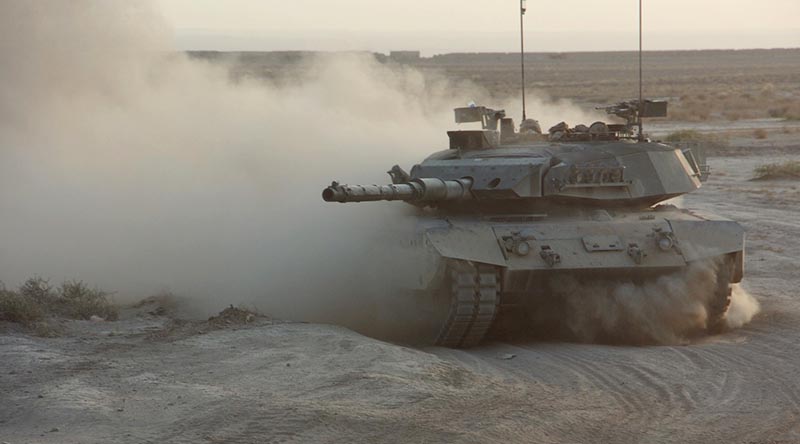
Many Taliban insurgents learned the hard way the capabilities of the Leopard 2’s main gun during this period when attacking Canadian strong points with rocket-propelled grenades (RPG) and indirect fires. Leopard tank crews fired 105mm rounds that destroyed enemy ambush parties and mortar groups that had infiltrated the Zhari District.
Tanks, with their superior armoured protection and mobility, have led as a default during all moves in both open and close terrain. We should rarely be in such a rush so as to prevent our engineers from conducting vulnerable point searches at defiles and chokepoints.
Exposed routinely to intense hostile fire from unknown sources, dismounted infantry troops often lack sufficient firepower to destroy well-protected and camouflaged enemy positions. Tanks provide the punch required for breaching structures and they were deployed specifically to increase the protection of our dismounted soldiers.
Equipped with a dozer blade, mine roller and mine plough in each troop of four tanks, the Leopard fleet of vehicles has restored tactical mobility to the combined-arms team in Afghanistan through its ability to penetrate grape and marijuana fields, clear mine and IED belts and breach mud walls and compounds that were previously impassable to the LAV III.
It is not known if any senior officer, RAAC or other, put the case for Australian tanks to be deployed to Afghanistan. It could be argued that until 2007, our Leopard tanks were too lightly armoured. Canada deployed their tank squadron to Afghanistan in late 2006. Given the need for introduction into service and crew training, any Australian deployment of M1A1 tanks prior to 2009, would seem unlikely.
Sadly, however, the RAAC seems to have lacked the visionaries that Canada possessed when it identified the need for close fire support for its infantry.
Lieutenant Colonel Bruce Cameron, MC, RAAC (Ret’d)
.
.
FILE IMAGE (2006): A Leopard C2 tank from Lord Strathcona’s Horse (Royal Canadians) on patrol in Afghanistan. Official Canadian Armed Forces photo (via DVIDS).
.
.

.
.