
NZ Herc embeds in RAAF squadron

For the first time, a Royal New Zealand Air Force (RNZAF) C-130J Hercules has been flying under an Australian call sign while embedded in a Royal Australian Air Force (RAAF) squadron.
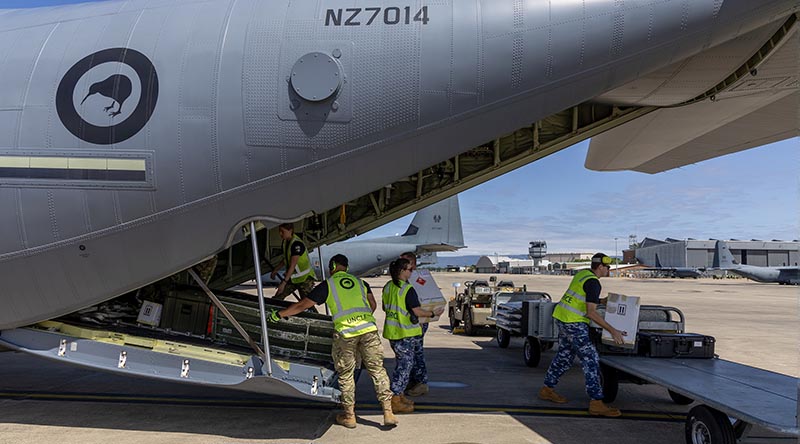
CAPTION: Royal New Zealand Air Force and Royal Australian Air Force air movements personnel unload cargo from a RNZAF C-130J-30 Hercules at RAAF Base Richmond during Exercise Trojan Compass. Photo by Leading Aircraftwoan Mikaela Fernlund.
The RNZAF No. 40 Squadron aircraft, crew and supporting detachment were deployed last month to RAAF Base Richmond in New South Wales to conduct Exercise Trojan Compass, enhancing interoperability and interchangeability between the Anzac air forces.
RNZAF crew, embedded in RAAF No. 37 Squadron, completed six flights in support of the Australian Defence Force under their call signs to a variety of locations across Australia and the Indo-Pacific.
Crews flew 101.3 hours, carrying 52 tonnes of payload and 45 tonnes of cargo during the five-week deployment.

New Zealand detachment commander Squadron Leader Adam Palmer said the exercise achieved a number of milestones for the Kiwi air and ground crews.
“We were fully integrated into the ADF’s tasking system and directly supported their operations in the south-west Pacific and into Southeast Asia,” Squadron Leader Palmer said.
“The maintainers were able to confirm the certification of their standards, which means they will now be allowed to work on Australian aircraft.
“The exercise was a further step towards interchangeability, where personnel from each air force can work seamlessly with each other’s fleets.”
The majority of flights the C-130J crews flew supported Pacific engagement, with missions to Papua New Guinea, Fiji, Vanuatu and Malaysia.
“We also flew to RAAF bases around the country, including to Williamtown, Amberley, Townsville, Darwin and Curtin.”
RNZAF logistics officer Flight Lieutenant Kelsey May worked alongside her Australian counterpart Fight Lieutenant Riley Kennedy.
“It has been a good learning opportunity for all of us,” Fight Lieutenant Kennedy said.
“What has been working really well is that we have similar machinery and similar aircraft.
“It makes it easy for us to prepare freight and load as we have the same processes and procedures.”
Flight Lieutenant Kennedy said interoperability was the key outcome of the exercise.
“Working with a foreign nation has been excellent and we have learnt a lot from each other along the way.”
.
.

.
.


