How to Destroy a Tank Regiment

Destroying a unit is surprisingly easy … just take away its raison d’etre, i.e. the essential purpose for its existence.
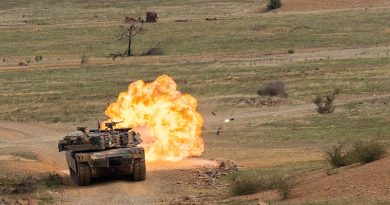
Maybe it’s something that only applies to tank regiments, though a much wider application is more likely. A tank regiment has a single focus, that of destroying the enemy by fire and manoeuvre. The unit’s whole being is focussed on honing its skills to this end.
Recently the RAAC created an Armoured Cavalry Regiment construct whereby each of the three Armoured Corps units comprised a tank squadron, a reconnaissance squadron and an Armoured Personnel Carrier (APC) squadron. This was not successful, for a number of reasons.
One being the fact that the constant usage of the three tank squadrons far exceeded the ability of the 59 tanks (fleet numbers at that time) to sustain them. [The tank fleet was subsequently increased to 75.]
Before 1st Armoured Regiment could be reformed in its rightful role as a tank regiment, the Chief of Army gave the unit a new task; making it an experimentation unit whose role was to evaluate emerging technologies. Its tanks were stripped from it.

One would expect there to have been a backlash … i.e. the unit loyalty and esprit-de-corps that had been built up in it, would make the new entity very unpopular.
Is it possible that a unit’s role can be suddenly changed, while at the same time keeping the support of its members?
Australian soldiers are adaptable. Given the right leadership, they’ll do just about anything that’s asked of them (providing it contributes to an overall military purpose).
Unit members just have to be convinced as to how important their new role is.
This is what Army set about doing … all the psychological skills known were drawn upon to get the message across that it was crucial to have a unit which could properly evaluate emerging technologies … i.e. an experimentation unit. [This was, after all, what the Chief of Army wanted.]
No mention was made as to how this importance compared with the alternative of having a tank regiment; nor of the length of time it took to train a tank regiment to reach combat readiness. The entire focus of the ‘campaign’ (which it undoubtedly was) was designed to ensure that any Armoured Corps CO in his right mind, would want to command an experimentation unit.
Army had it all worked out! For a start, no-one would be forced to do anything. Those who wanted to, could transfer to the 2nd Cavalry Regiment (Townsville), as a tank crewman. Others could stay with 1 Armd Regt (in Adelaide) and join the new experimentation unit.
Serving members of 1 Armd Regt were convinced that they were doing the right thing by signing up for the new unit:
“Isn’t it better to have members of our own Corps, the end users, being the ones to work with these equipment manufacturers, tell them what it is we actually need, have a say in the kit we get and how it’s used? Rather than dragging the name of the unit you claim to love through the mud, you should be proud that 1 Armd is leading the charge.”
No-one really appreciated just how much they were being manipulated.
The idea that the ‘tank was dead’ was not far removed. The quote below is from a serving 1 Armd Regt member who is obviously convinced of the desirability of changing career streams:
“Due to the sheer number of drones in flight, both sides are under almost constant observation, therefore it is almost impossible to force concentrate for large-scale offensive operations. As such, a large, highly trained, expensive armoured battlegroup can be made ineffective by a disproportionately small group of individuals using comparatively very cheap equipment.”
A response to this will be forthcoming.
Lieutenant Colonel Bruce Cameron, MC, RAAC (Ret’d)
.
.
ChatGPT image
.
.

.
.