Value offered through gameplay

What if a corporal was the only person left alive in a platoon’s chain of command?
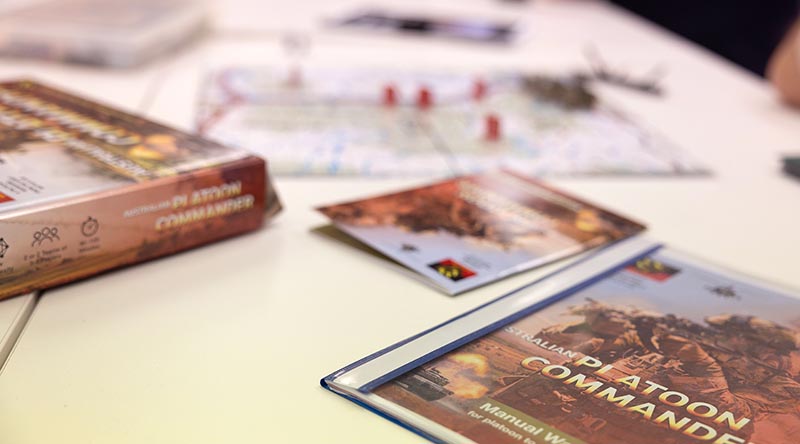
CAPTION: The Australian Platoon Commander, a game developed by The Army Battlelab. Story and photos by Photo by Flying Officer Freya Hansen.
Participants of the Wargame Facilitators’ Course, run by the Australian War College (AWC), exercised this very scenario during the residential phase in October.
Course director Colonel Darren Huxley, a reservist at AWC, helps run the all-rank inclusive course that includes training games such as Australian Platoon Commander.
“In a game, in a very cheap and fast fashion, we can give a corporal the experience of making the types of decisions we would expect of a platoon commander in combat,” Colonel Huxley said.

Wargames provide an opportunity to think strategically and exercise immediate decision-making skills necessary for planning.
Throughout his infantry career, Colonel Huxley found decision-making practice was not prioritised, but rather left to individuals to undertake in their own time.
He believes cognitive skills should be trained the same as other skills, such as weapons and physical fitness.
“The more reps and sets you do, the more you play, the more comfortable you get with decision-making, and the better you get at it,” he said.
“I was fortunate to have commanders who were all very keen on using wargames to support learning about history, and our particular profession in the infantry.
“We designed this course so others could have that opportunity as well.”
The course has an online and residential phase, spanning five weeks.
The focus of the residential phase is practical wargaming workshops, in which participants can test their newfound game-facilitating skills and receive feedback.
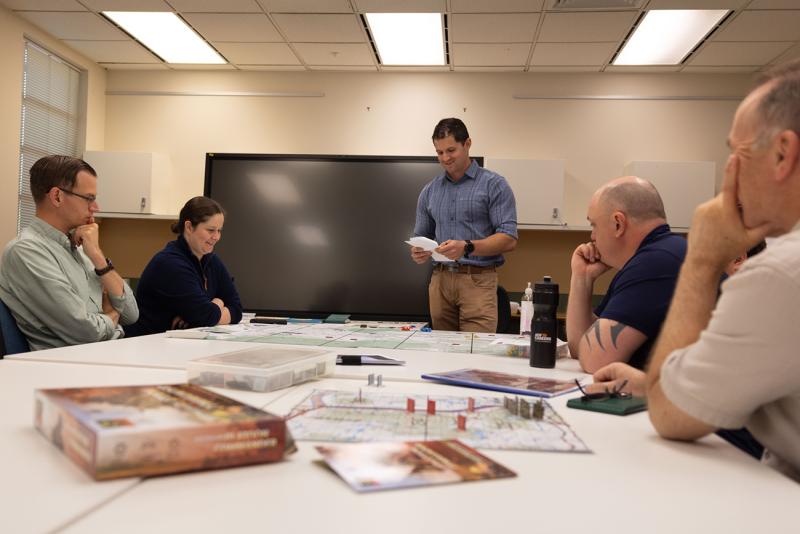
Rachel Harris, an APS data analyst in the Guided Weapons and Explosive Ordnance Group, facilitated her first wargame during the course.
“It went fantastically – the group was very engaged, and I actually had a lot of fun watching them trying to figure out what each other’s mission was,” Mrs Harris said.
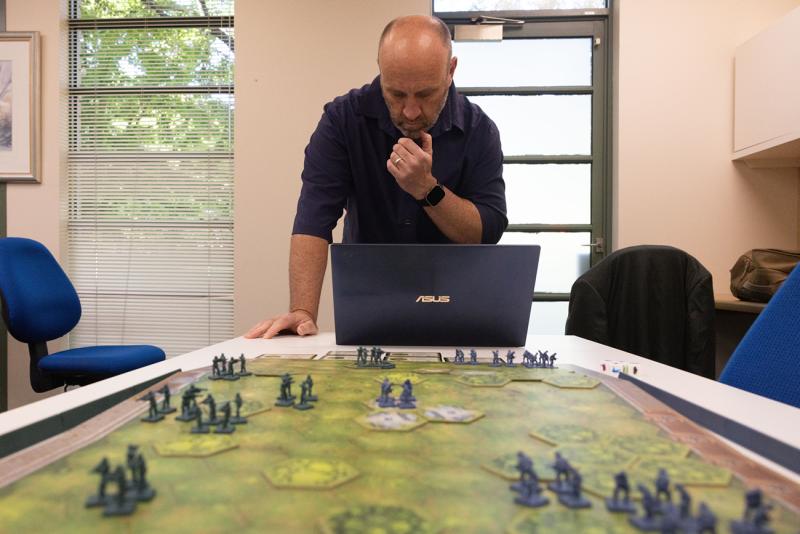
Each member chooses a game and basic equipment to run their workshop, which includes commercial games such as Pandemic and Memoir ’44, and games designed specifically for the military.
“Using more map games would be phenomenal – to have a look at how our units move and how our adversaries might potentially use the advantage of the terrain,” Mrs Harris said.
She attended the course after seeing a professional wargame as part of her role, and playing in her spare time with her wife, a former Australian Army officer.
“We [Defence] probably need to be doing a lot more wargaming, and interacting with those who do a lot more wargaming, to understand our capabilities better for the future,” Mrs Harris said.
“From a weapons-analysis point of view, it’s good because you can start to predict what’s going to happen and how we should fight that in the future.”
Colonel Huxley said he wanted to see more wargames facilitated by NCOs – the soldiers, sailors and aviators who understand the value they offer to training.
“Games teach us strategy, teamwork, planning and a host of other important skills without the expense of major exercises,” he said.
“We want good game facilitators out in the units of the ADF and across Defence.
“We hope this course is a venue to make that happen.”
.
.

.
.