
PNG air wing leads first bilateral exercise

The ability to operate far from home depends on more than aircraft. It requires personnel who can establish a forward location, sustain operations and adapt when conditions change.
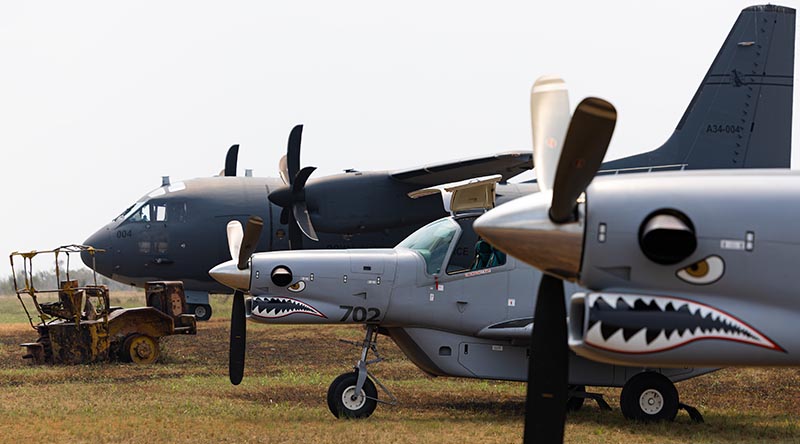
CAPTION: Two Papua New Guinea Defence Force PAC-750 aircraft and a Royal Australian Air Force C-27J Spartan at Green River airfield, Papua New Guinea, during Exercise Kapa Pisin 26. Story by Flight Lieutenant Natasha Silver. ADF-supplied photo by unnamed photographer.
During Exercise Kapa Pisin 26, the Papua New Guinea Defence Force (PNGDF) Air Transport Wing (ATW) tested those skills while leading its first bilateral exercise alongside the ADF.
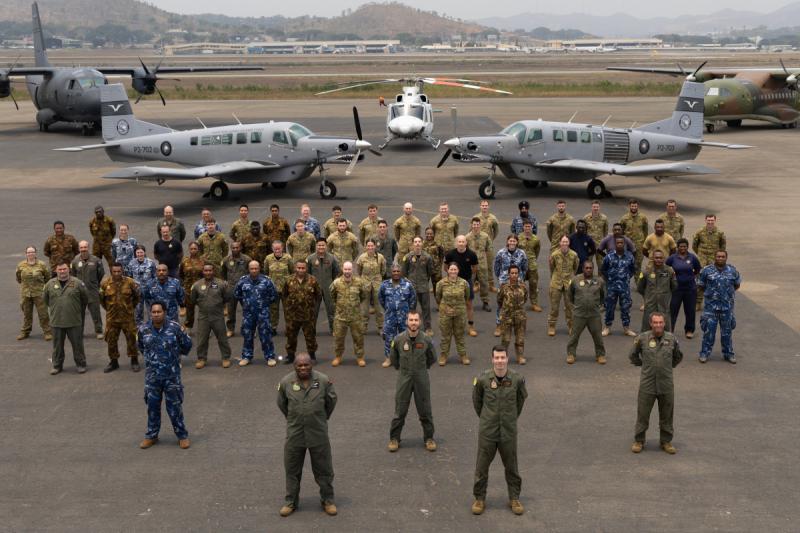
Conducted from October 16 to 24, the exercise brought together PNGDF ATW and Long-Range Reconnaissance Unit personnel with ADF personnel from RAAF’s 35SQN and Combat Support Group, and the Australian Army’s 1CDO Regt.
The exercise name, translating to Iron Bird, reflects the involvement of ATW’s two PAC-750 aircraft, a contracted helicopter and 35SQN C-27J.

Operating from locations including Vanimo and Green River, personnel established temporary facilities and practised conducting aviation operations in austere conditions.
Lieutenant Colonel Doug Vavar, CO PNGDF ATW, said the training included surveillance, search and rescue, joint personnel recovery and a simulated aircraft crash response.
“For PNGDF ATW, the exercise placed responsibility for planning, coordinating and executing a bilateral activity on the wing itself,” Lieutenant Colonel Vavar said.
“We have organically planned, brought in stakeholders and are now here executing a bilateral exercise.
“I’m very proud of that fact.
“There’s been a big team on the ground, which reflects our joint capability and how we’ve been operating over the past couple of years.
“Because of this exercise, if we’re called upon to conduct an operation with our allies, we’re not stepping into it without knowing we have trained and are ready.
“This exercise showcases our ability to project assistance into any area within our country and our neighbours if they need assistance.”
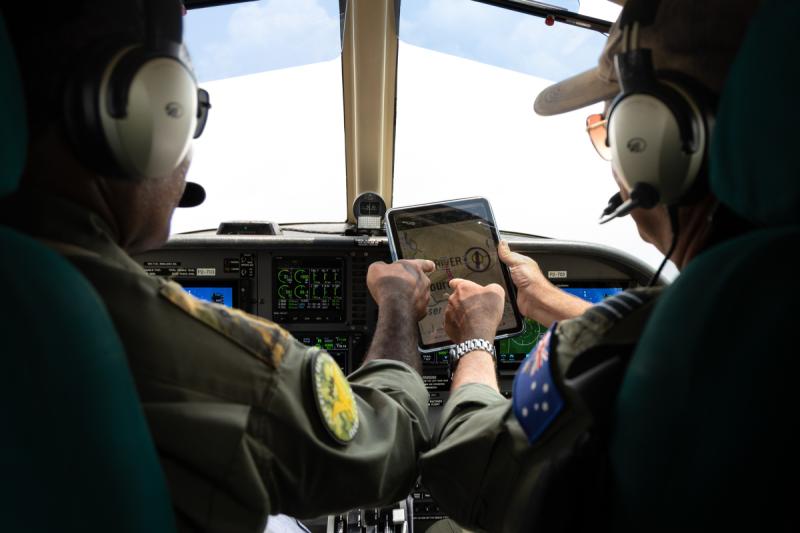
Over six days, ATW and 35SQN flew for 67 hours across 33 sorties, moved 12,343 kilograms of cargo and 231 passengers, and conducted three complex training serials.
Exercise participants also adapted to real-world demands, supporting the PNG government’s response to drought-affected communities through humanitarian-assistance missions.
For Wing Commander Mark Seery, CO 35SQN, the ability to respond to changing circumstances was a defining feature of the activity.
“The demonstrated resilience they have shown across this whole activity – the ability to adapt and remain agile as the scenarios and situations have changed – both in the real world and the exercise world – would be the thing that I’m mostly impressed by,” Wing Commander Seery said.
Following the exercise, PNGDF ATW will provide a statement of capability to PNGDF headquarters, documenting the air element’s demonstrated performance to inform government options.
For the wing, Kapa Pisin marks a step beyond participating in bilateral training: an opportunity to plan, lead and execute aviation activity while continuing to build practical cooperation with Australia.
.
.

.
.


