
Unleashing dogs of war

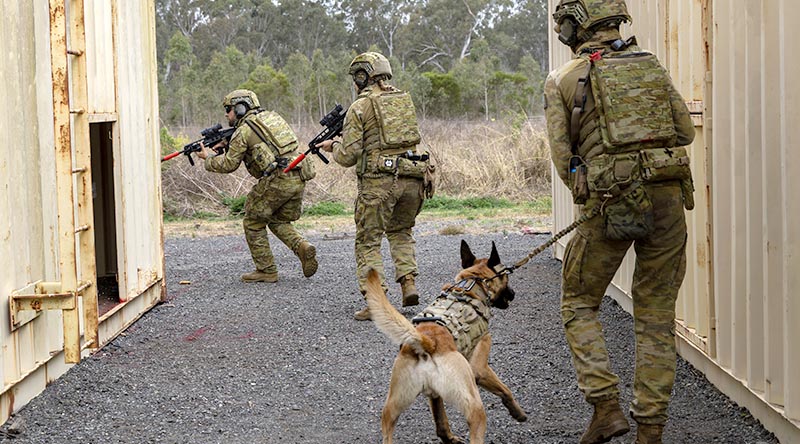
A helicopter overhead, blank fire cracking across the range and a building to clear made for anything but an ordinary day for 23SQN’s military working dog (MWD) teams.
CAPTION: Military working dog handlers from RAAF No. 23 Squadron, conduct urban training at RAAF Base Amberley, Queensland. Story by Flight Lieutenant Natasha Silver. Photo by Leading Aircraftman Campbell Latch.
The scenarios formed part of a dedicated training week designed to sharpen the skills that handlers and dogs rely upon when responding to incidents on a base or flightline.
The week brought the squadron’s security forces MWD section together for realistic training rarely conducted collectively because of shift work.
Teams rotated through urban clearance, bite serials, blank firing, group obedience and winching – each activity pushing dogs and handlers to operate confidently under pressure.

Leading Aircraftman Max Turnbull, an MWD handler with security forces, said the exercise reinforced skills used in day-to-day operations.
“In security forces, we detect, we deter and we detain,” Leading Aircraftman Turnbull said.
“The training directly correlates to incident response and base patrols.”
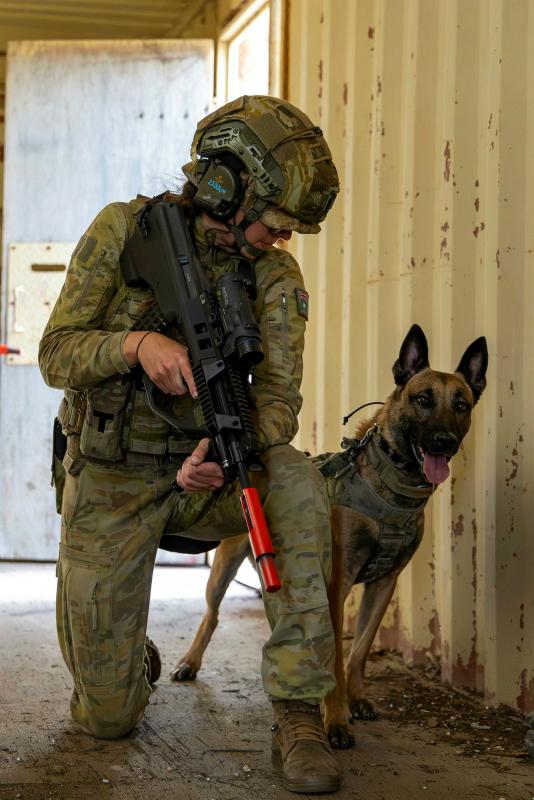
Urban clearance involved teams moving through buildings, using their dogs to locate people and secure spaces.
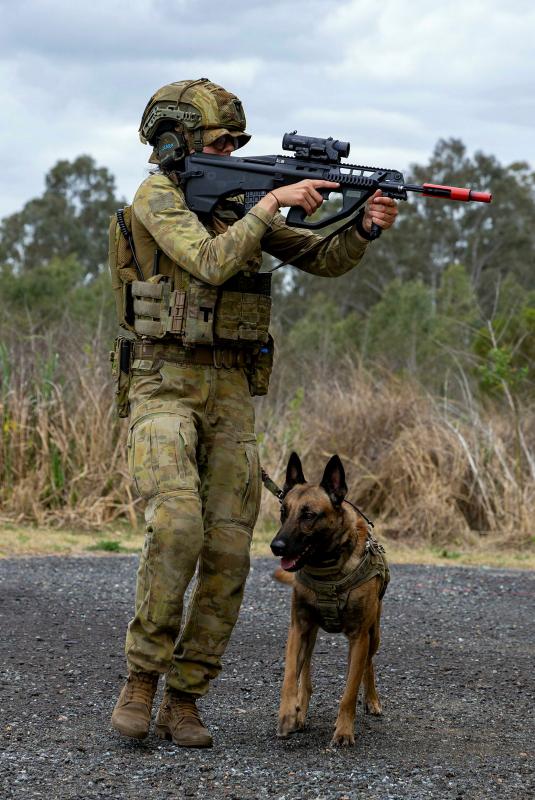
Blank firing introduced noise and distraction, testing the dogs’ ability to remain calm around firearms.
“It’s really important for our dogs to remain stable during our firing positions,” Leading Aircraftman Turnbull said.
“Focus is a big aspect of that.
“It drowns out the noise and keeps them clear-headed so they focus on us and what we need them to do.”
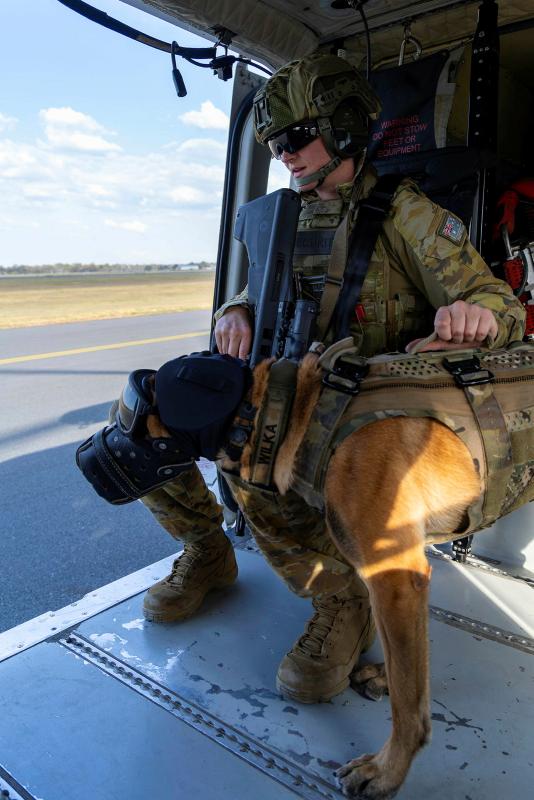
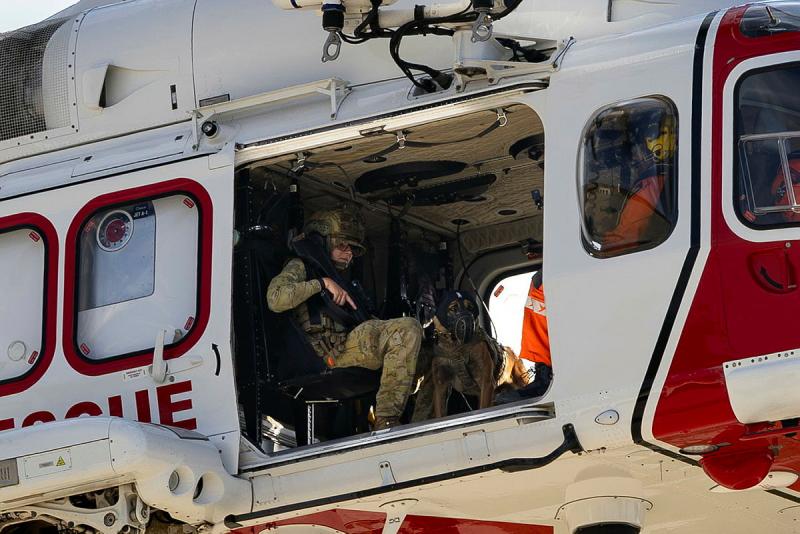
The teams also trained with a search-and-rescue helicopter, exposing dogs to the noise and movement of rotary-wing operations.
“It’s really important to get the dogs used to being around loud aircraft,” Leading Aircraftman Turnbull said.
“I’m proud of how my dog responded.
“He was brave and he trusted me, which is the most important part.”
Leading Aircraftman Turnbull said trust underpins an effective MWD team.
“That bond is crucial.
“If they don’t trust you, they will not do the job correctly.”
That connection is built through constant repetition and time together, from training and exercise to the quieter moments between tasks.
“There’s no better feeling than working next to my military working dog, Wayne,” Leading Aircraftman Turnbull said.
“He just has that spark.
“When I’m having my low days, he’s always with me and boosting me up.”
For 23SQN, bringing the section together meant more opportunities to refine techniques, share experience and build confidence across the team.
“The more that we can do, the better for our dogs, the better for the team.
“We get used to it and we know what to do.”
.
.

.
.


