New Black Hawks tested in PNG highlands

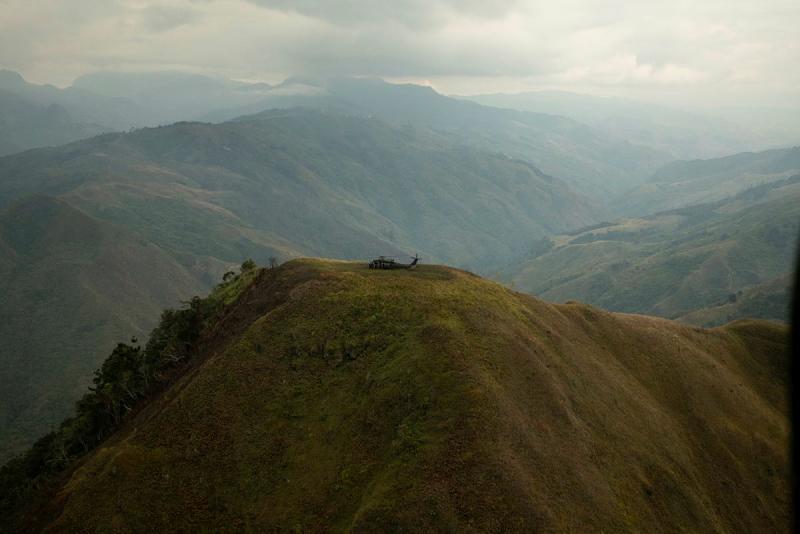
Against a backdrop of towering mountain pinnacles, narrow valleys and remote highland airstrips, Australian Army UH-60M Black Hawks completed their first international deployment in PNG last month.
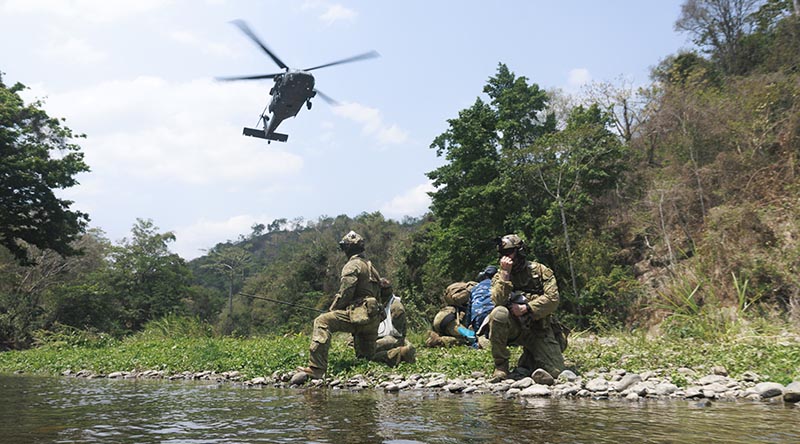
CAPTION: An Australian Army UH-60M Black Hawk helicopter prepares to land during an aeromedical evacuation scenario as part of Exercise Helicon Luk 2026 in Papua New Guinea. Photo by Corporal Andrew Shaw.
Personnel from 16 Avn Bde deployed on Exercise Helicon Luk in the rugged terrain of PNG’s Central Highlands, testing aircraft, crews and sustainment in one of the region’s most challenging aviation environments.
The annual exercise enables Army aircrew to train in high-altitude conditions while reinforcing the longstanding defence relationship with PNG.
CO Task Unit Endurance Lieutenant Colonel Christopher Porada said this year’s exercise marked a significant step in Army Aviation’s transition to the UH-60M.

Beyond flight operations, the exercise tested Army’s ability to deploy aircraft beyond Australia’s shores and sustain operations in the near region.
From transporting aircraft and personnel into theatre to maintaining supply chains across the region, the deployment provided valuable lessons in logistics, maintenance and regional support networks.
“Regional sustainment in an archipelagic area is a complex series of challenges, ensuring the supply chains of fuel and spare parts, as well as food and water can be maintained,” Lieutenant Colonel Porada said.
“This year’s Exercise Helicon Luk has been a great success in practising our regional sustainment.”
The deployment also carried personal significance for Lieutenant Colonel Porada, as his first overseas deployment with Army Aviation was to PNG on the 2009 iteration of Exercise Helicon Luk, with Army’s S-70A Black Hawk.
“It’s a great honour and a privilege to be here. I’m really grateful for the opportunity, both to deploy with Army Aviation again and also to return to Papua New Guinea,” Lieutenant Colonel Porada said.
Another UH-60M pilot from 16 Avn Bde said PNG’s unique topography – with the combination of altitude, heat and humidity – were a welcome challenge for crews and aircraft.
“Papua New Guinea has very unique geographical features, with the high mountains that we don’t have in Australia,” the pilot said.
“In addition, the high temperature and humidity make it an environment where operating helicopters is quite different to Australia.”
One of the highlights for aircrew was engaging with local communities.
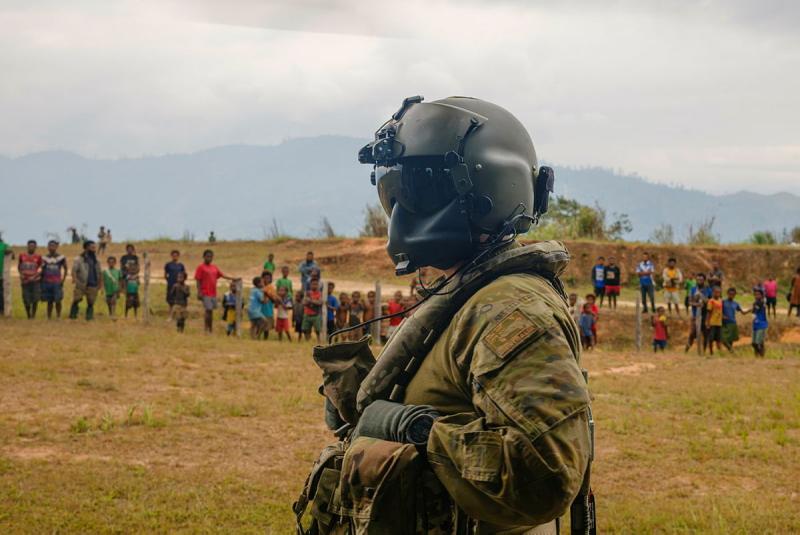
“When we operate in the highlands and we land on runways with surrounding villages, and everyone comes out to say hi,” the pilot said.
“They’re waving and smiling, and just happy to see us.
“It brings a smile to my face every time I go up there.”
Flying among PNG’s mountain ranges also offered a perspective few people experience.
“Operating in mountain bowls up at 10,000 feet is quite surreal.
“It’s a place where likely no human feet have stepped if they didn’t step off a helicopter,” the pilot said.
Lieutenant Colonel Porada said Exercise Helicon Luk was another step in the UH-60M Black Hawk’s introduction into service.
“For future iterations, in addition to doing the individual qualifications for our crews, we’ll seek to do collective training where we involve multiple aircraft in formation, operate with troops on board, or layer on tactical scenarios.”
.
.

.
.