
Finding meaning in the war we lost

Story by Sergeant Matt Bickerton
They’d stolen our things and were angry, arguing and pointing at us. We couldn’t understand them. Without an interpreter, we were left guessing their intentions.
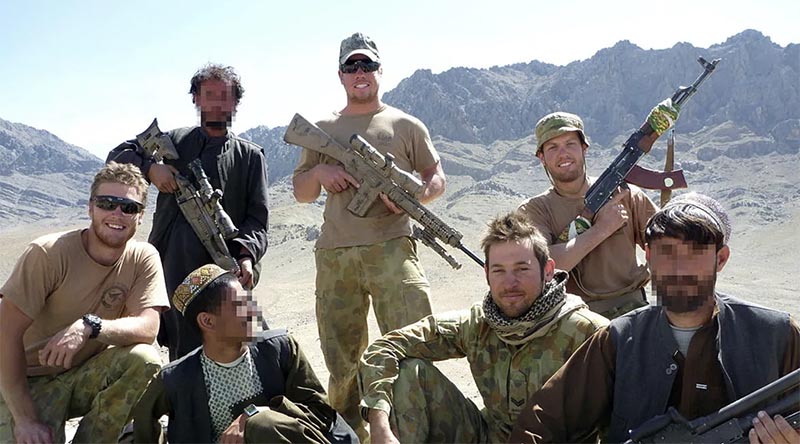
FILE PHOTO: Australian Army snipers from call sign 63-X-ray, 5RAR, with militiamen at an Afghan militia camp in the Chora Valley, Afghanistan. Photo digitally altered for security.
We were outnumbered five to one, but well-armed and determined that, if it came to it, we’d defend ourselves.
It was Afghanistan, March 2011, during Mentoring Task Force 2 with 5RAR.

An Afghan construction company had employed a militia to protect a section of road in the Chora Valley. The Taliban regularly targeted them, inflicting casualties.
I was a junior soldier in a four-man sniper team, call sign 63-X-ray, tasked to embed with the militia for five days to defend their position from Taliban attacks.
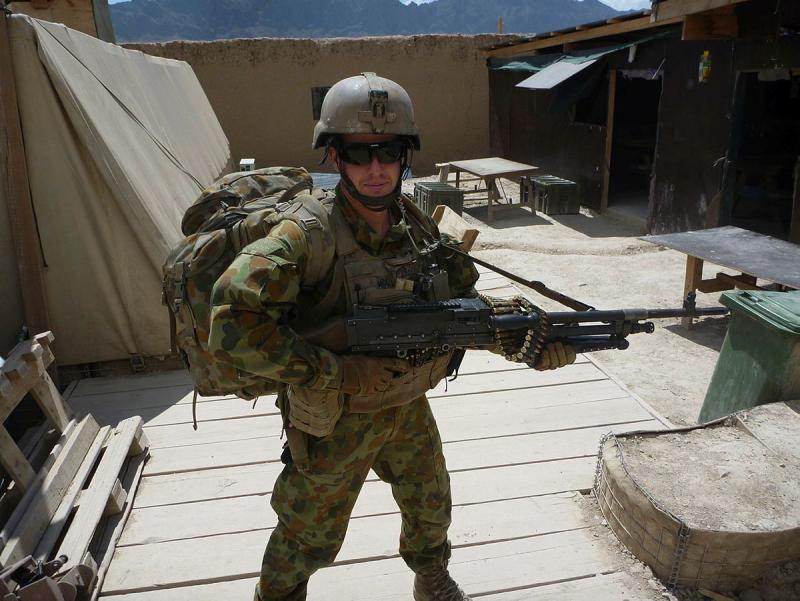
Before leaving Combat Outpost Mashal, I remember my team leader, ‘K’, looking at me with a little hesitation and telling me I was carrying the MAG58 machine gun. I was the smallest bloke on the team.
We needed the firepower given we were to occupy a position some distance from support.
My combined kit weighed 62kg. I weighed only 6kg more.
We patrolled into the area with soldiers from Combat Outpost Mashal. It took everything in me to keep up as they moved swiftly in patrol order for hours through undulating terrain, aqueducts and muddy fields.
I later wrote in my journal, “With all that weight, I sunk with every step”.
It was the hardest patrol of my career.
We moved onto a feature south of the green zone at the militia’s camp, where my team stayed behind, undetected by enemy surveillance.
There were about 20 poorly equipped and poorly trained militiamen living on this rocky hilltop with a donkey that ferried their supplies.
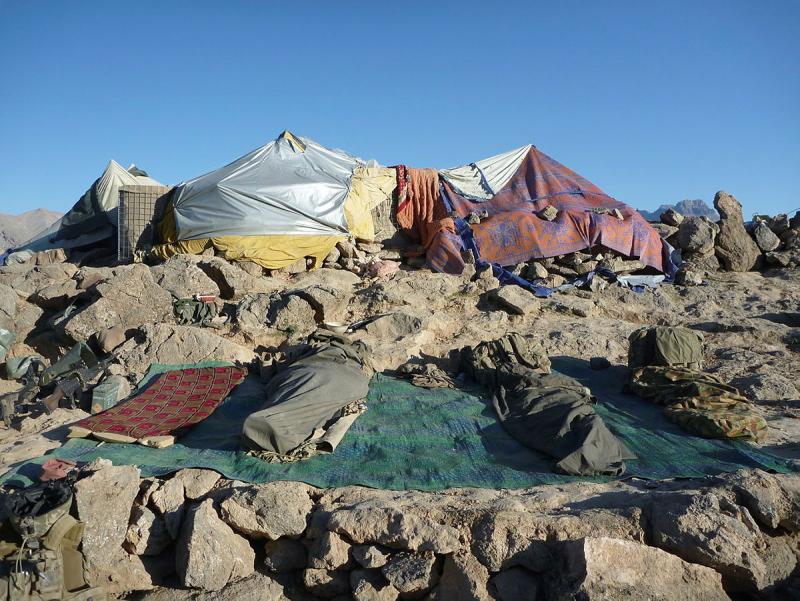
They lived in makeshift tents made from tarpaulins and rocks, with minimal Hesco defensive barriers. They greeted us with tea and naan bread.
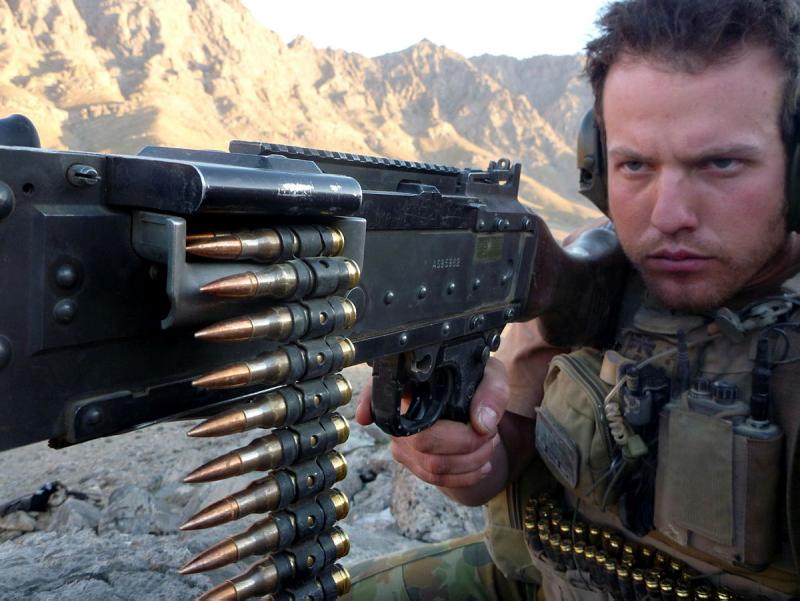
Between my team, we maintained a 24-hour picket over five days, parallel to the militia’s watch.
The next morning, we woke to an explosion.
Several militiamen had washed themselves in an aqueduct at the base of the hill where the Taliban detonated an improvised explosive device.
Luckily, the men were unharmed, just muddy, with one sustaining minor damage to his rifle.
That same day, I noticed a knife and torch missing from my body armour. My team-mates – Gus and Bobby – also had items missing.
K spoke to the militia commander and somehow communicated, using a few words from a Pashto phrase book and hand gestures, that our stuff was missing.
The militia commander searched the area. Clearly frustrated, he called his men in and spoke to them.
There was arguing and anger, and they pointed and looked at us, which was disconcerting since we had no interpreter and no way of knowing what they were saying.
The younger men grouped and moved 100m from our position, which only added to our concern.
We had a quick team meeting and discussed contingencies if they turned on us.
I wrote in my journal, “We had prepared to defend ourselves and kill everyone here if it came to it”.
While our team was conducting observations, the young men discreetly returned our items, which I noticed from the corner of my eye.
From then on, we got along, playing games and eating together.
That afternoon, as the sun inched towards the horizon, K noticed suspicious activity around our primary engagement area.
We took firing positions and waited.
On the other side of the valley was a second militia position with another embedded sniper team, 63-Zulu.
Insurgents hit them first. We heard gunfire, then reports on the radio.
Thirty seconds later, I saw a burst of light come from an RPG and responded with a hail of bullets, while receiving small-arms fire.
One round ricocheted off a rock in front of me. I remember pausing, looking at Gus and, strangely, saying with wide-eyed amusement, “Did you see that?!”
Gus looked at me, concerned, and yelled, “Shoot back!”.
The enemy concealed themselves in an abandoned building, firing from its depths in the dark.
I focused my fire into the building’s apertures.
The militia took a back seat and let us manage the contact.
Up north, 63-Zulu wounded an insurgent during their attack.
An uncrewed aerial vehicle tracked that enemy’s casualty evacuation up the valley with soldiers from Patrol Base Mirwais following up the next day.
They found the remains of one insurgent with a bullet wound to the face and placed 20 other men under capture.
That same day, the militia commander we were working with went into the green zone to meet locals and assess the battle damage.
He communicated to us that we killed two insurgents during our engagement.
Later that day, we watched hundreds of people gather 300m from our position. They were at a cemetery, with a smaller group carrying two bodies for burial.
It was surreal, a feeling that remains with me today, to have watched through my spotting scope what I knew must have been the local community burying those we killed.
When I look back on Afghanistan, and on the events of 2021 when the Taliban took back the country, I sometimes wonder what it was all for.
It was only in writing this story that I found an answer for myself.
In Afghanistan, I had purpose, like on that hill – I helped defend a position from enemy attack.
Intelligence reporting later showed that militia wasn’t attacked for months, which likely saved some lives.
I find meaning in that small victory, even if the war was lost.
.
.

.
.


